

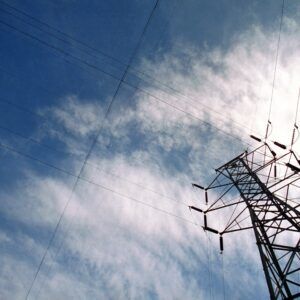
When you’re working on or near overhead powerlines, there’s one thing you definitely don’t want to spark… yourself. Whether you’re trimming trees, operating heavy equipment, or just trying to mind your business on a busy jobsite, those lines above aren’t just decoration… they’re carrying enough energy to turn a normal workday into a fireworks show you don’t want front-row seats to.
So before you gear up and step out, let’s talk about staying safe, staying smart, and keeping all your hair exactly where it belongs. Here’s everything you need to know about working around overhead powerlines, without becoming a human lightning rod.
Hazards
There are many hazards associated with working near or on powerlines, including:
- Electric shock/electrocution
- Arc flash/arc blast
- Fire hazards
- Struck-by hazards
- And, environmental hazards
Minimum Approach Distance
OSHA standard 1910.269 states that Minimum Approach Distances (MAD) must be maintained by unprotected, unqualified employees when exposed to energized parts. These distances are based on the voltage level involved. To work within a MAD, qualified employees must use proper work techniques, equipment, and Personal Protective Equipment (PPE). Additionally, the National Electrical Safety Code (NESC) also provides MADs.
OSHA requires maintaining at least 10 feet of clearance from energized lines up to 50 kV. For lines above 50 kV, increase the distance by 4 inches for every additional 10 kV.
Dedicated Spotter
Each worksite(s) that is involved with overhead powerline work must have a dedicated, trained spotter. The spotter’s sole responsibility is to monitor conditions, direct traffic around powerlines, and use audible alarms to alert equipment operators to potential hazards.
Signage
Overhead powerline signage isn’t just another piece of jobsite décor, it’s a crucial warning system designed to catch your attention before you drift into a danger zone.
Typically, these signs mark:
- Low-hanging or hard-to-see powerlines
- High-voltage areas
- Equipment clearance limits
- And, restricted zones for tall or mobile equipment
Bold colors, high-contrast lettering, and clear symbols help workers instantly recognize hazards, even from a distance or while operating machinery. When placed correctly at entry points, access roads, and near the hazard itself, signage serves as a visual reminder to slow down, look up, and think twice.
There are different types of signage. Typically warning signs for general high voltage lines include the classic “DANGER-HIGH VOLTAGE” or “WARNING-OVERHEAD POWERLINES” verbiage.
Additional signage includes:
- Clearance Height Signs – Lists the minimum approach distance or maximum equipment height allowed in the area. These may be seen on access roads, equipment paths, or entry points for cranes, dump trucks, or boom lifts
- Low-Hanging Powerline Signs – These are specifically used when overhead lines dip lower than usual and are often placed well ahead of the hazard so operators can prepare in advance
- Equipment Operation Warning Signs – These signs remind operations to lower booms, watch their swing radius, avoid traveling with raised equipment, and to maintain spotter communication
- And, Utility-Owned Markers – Utility companies may install pole identification tags, voltage level markers, and warning strips or reflectors to help workers identify what they’re working around
Personal Protective Equipment (PPE)
Personal Protective Equipment (PPE) to ensure safety when working on or near energized lines may include:
- Insulated gloves
- Insulated footwear
- Class E hard hat
- Flame-resistant clothing
- Eye and face protection
- And, hearing protection, if necessary
Safe Work Practices
Prior to working on or near energized lines, it is critical to understand safe work practices, such as:
- Always assume lines are energized, unless confirmed otherwise by a utility company
- Maintain proper clearance; this includes keeping tools, ladders, etc. at a safe distance
- De-energize when possible
- Use spotters or barriers when needed
- Be cautious of wet or stormy conditions
- Inspect PPE and insulation equipment daily
- And, receive proper training
Conclusion
Overhead powerlines may blend into the background of a busy jobsite, but they demand your full attention every single day. From clear signage and visual markers to staying aware of equipment heights and maintaining proper distances, safety around powerlines is all about thinking upward before you move forward. By recognizing hazards early, following posted warnings, and treating every line like it’s energized, you’re not just protecting yourself, you’re protecting everyone who steps onto that site.

Brooklyn Nice
Brooklyn Nice is a Content Development Specialist at JJ Safety, where she creates engaging, OSHA-focused safety content, training materials, and educational resources for workers and employers. She has earned her OSHA 10 Certification, providing her with a strong foundation in workplace safety principles and industry best practices.