

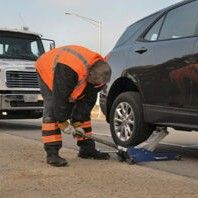
Picture this: you’re cruising down the road, windows down, snacks in hand, and suddenly POP! your tire decides it’s had enough. Flat tire panic mode: activated. But don’t worry! A flat tire isn’t the end of the world. With the right know-how, a little preparation, and some common sense, you can tackle a flat safely and get back on the road without turning it into a roadside disaster.
What Causes a Flat Tire?
There are many causes as to why a flat tire can occur. Some of these causes include:
- Sharp objects
- Ripped rubber
- Separation from the tire and rim
- Hitting curbs often
- Or, road hazards, such as potholes
Aside from flat tires, tire blowouts are also a hazard and occur due to:
- Worn out tires
- Under or over-inflated tires
- Slow leaks
- Or, structurally compromised tires
What Happens When a Flat Tire Occurs?
When a flat tire occurs, the best thing to do is stay calm and follow these safety procedures:
- Pull off the road safely and turn on your hazards
- Prepare all the tools and equipment needed to fix the flat tire
- And, swap out the flat tire with your spare tire
If a blowout occurs:
- Stay calm
- Control steering
- Carefully and slowly press on the brakes
- Pull off to the side of the road safely
- And, call roadside assistance and wait in your vehicle until they arrive
How to Change a Flat Tire
When changing a flat tire, it is recommended to follow these steps:
- Find a safe place. Slowly pull over to a wide shoulder or parking lot. If you can, stay clear of oncoming traffic. If that’s not possible, turn on your vehicle’s hazard lights to alert other drivers that you’ve stopped.
- Set the parking brake and place wheel wedges. Place wheel wedges in front or behind the opposite tire(s).
- Remove any hubcaps or wheel covers. Some vehicles have hubcaps that cover the lug nuts.
- Loosen lug nuts. Use a lug wrench to loosen the nuts but do not remove them from the tire
- Place a jack under the vehicle. Place under the vehicle frame alongside the flat tire, unless the owner’s manual says otherwise. Follow the instructions in the owner’s manual to safely lift and avoid vehicle damage.
- Raise the vehicle. Raise the vehicle until the flat tire is about 6 inches above the ground, then remove the lug nuts completely.
- Remove the flat. Grip the tire by the treads, gently pull it towards you, and set the tire on its side.
- Place the spare on the lug bolts. Place the spare on the hub by lining up the rim with the lug bolts. Push gently until the bolts show through the rim. Tighten all the lug nuts with your hand.
- Lower the vehicle. Use the jack to lower the vehicle so the spare is resting on the ground, but the full weight of the car is not on the tire. Tighten all lug nuts with a wrench, then lower the car fully to the ground.
- Replace the hubcap. Place the hubcap back on the tire if it fits the spare
- Check the tire pressure. Ensure the tire pressure in the spare is safe to drive on. Spares typically require 60 psi.
Conclusion
Dealing with a flat tire might feel stressful at first, but with a calm approach and the right safety steps, it doesn’t have to ruin your day. Remember to pull over safely, use your hazard lights, and follow the proper procedures to change or get help for your tire. A little preparation goes a long way, and knowing what to do turns a roadside mishap into just another story you can laugh about later.

Brooklyn Nice
Brooklyn Nice is a Content Development Specialist at JJ Safety, where she creates engaging, OSHA-focused safety content, training materials, and educational resources for workers and employers. She has earned her OSHA 10 Certification, providing her with a strong foundation in workplace safety principles and industry best practices.