
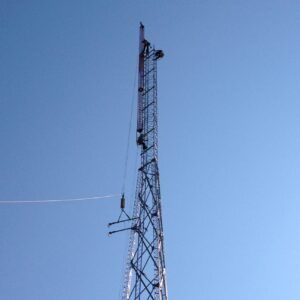
Tower climber safety is one of the most critical aspects of working in the telecommunications and infrastructure industries. Tower climbers face some of the most dangerous conditions in the field, such as working at extreme heights, in varying weather, and around complex equipment. Ensuring proper training, fall protection, and safe work practices isn’t just about compliance; it’s about saving lives.
The Occupational Safety and Health Administration (OSHA) and the Federal Communications Commission regulate the communication tower industry to ensure the safety of employees.
What are the Hazards?
There are many frequently encountered hazards that tower climbers face, such as:
- Falls from great heights
- Inclement weather
- Equipment failure
- Structural collapses of towers
- Electrical hazards
- Falling objects
- And, fatigue
Pre-Climbing
A hazard assessment must be conducted to identify, assess, and control employee exposure to hazards. The severity of identified hazards must be determined and control measures must be implemented using the hierarchy of controls. Control measures should also include rescue procedures and equipment to be used in the event of an emergency.
Hazards identified during the hazard assessment should have a corresponding Job Hazard Analysis (JHA) for each task. While JHA forms may vary by company, they should be reviewed and approved by a competent person or job supervisor prior to climbing.
Weather Conditions
Before any climbing activity begins, weather conditions must be confirmed to be safe and stable. Climbing must never occur when lightning or thunder is present or expected in the area. Extreme caution is required during rain, ice, or any adverse conditions that may increase climbing risks or compromise the integrity of the structure. Wind speed thresholds and related weather criteria should be clearly defined in the hazard assessment to specify when climbing is permitted and when it must be suspended.
Electrical Safety
Qualified climbers that could potentially be exposed to electrical hazards must be trained about the electrical hazards they could encounter when climbing and any other relevant electrical safety procedures. All climbers working on electrical installations must have the appropriate training required prior to performing electrical work.
For qualified workers who may be exposed to Radio Frequency (RF/EME) hazards, they must be trained in the potential hazards of RF/EME and how to contain exposure within acceptable limits.
Personal Protective Equipment (PPE)
PPE that is typically required for most tower climbing jobs includes:
- Head protection (ANSI Z87.1)
- Approved eye protection
- Gloves
- Climbing boots with good arch support and a defined heel
- Work positioning lanyard (fall restraint)
- Energy-absorbing lanyards (fall arrest)
- And, cable grab/rope grab
Inspection
Inspect all personal fall arrest equipment before every climb, ensuring it is free from defects, damage, or excessive wear. Verify that each piece of fall protection equipment has a legible service tag. Any harness or component with a missing, unreadable, or expired tag must be immediately removed from service. Defective equipment should be clearly tagged as unusable or destroyed to prevent accidental use.
When not in use, PPE and fall protection equipment should be stored in a clean, dry location, protected from direct sunlight, chemicals, fumes, and other corrosive elements that could compromise their integrity.
Safe Practices
While tower climbing, always follow safe climbing practices. All unsafe climbing practices must be eliminated or corrected before accidents occur. There are a few safe practices tower climbers should follow, such as:
- Climb while rested, not fatigued
- Do not climb through or past unprotected electrical conductors
- Perform a visual inspection of the tower
- Only attach to a tower that has an adequate anchorage point
- Maintain 100% tie-off
- Do not throw any material up or down while on the tower
- Always keep three points of contact with the tower
- Do not hold or attach onto antenna lines, coax, conduits, etc., for support
- Do not climb while ill or under the influence of prescription medication or alcohol that could impair judgment or physical abilities
- Never climb without another qualified climber
- And, do not carry materials or tools when climbing; use a tool belt or a pulling rope to move materials up the tower
Conclusion
Tower climber safety depends on preparation, awareness, and adherence to established procedures. Every climb should begin with proper planning, thorough equipment inspections, and a commitment to using fall protection correctly. Encouraging communication, teamwork, and continuous safety training helps ensure that every climber returns home safely at the end of the day.

Brooklyn Nice
Brooklyn Nice is a Content Development Specialist at JJ Safety, where she creates engaging, OSHA-focused safety content, training materials, and educational resources for workers and employers. She has earned her OSHA 10 Certification, providing her with a strong foundation in workplace safety principles and industry best practices.