

Safe lifting techniques are critical for protecting workers from strains, sprains, and serious back injuries on the job. Every day, employees move, carry, and lift materials that can put stress on the body if not handled correctly. By following proper lifting methods, workers can reduce the risk of injury, stay productive, and return home safely at the end of every shift.
Hazards of Poor Lifting Techniques
The back is one of the most complicated regions of the body. When using poor lifting techniques, you can cause different hazards to your body, such as:
- Muscle Injuries – Most injuries caused by improper lifting techniques are either muscle strains or ligament sprains in the lower back
- Disc Injuries – Discs are located between the individual vertebrae of the spine and function as shock absorbers. Poor lifting techniques can cause vertebrae discs to shift out of alignment
- And, Joint Injuries – Each section of the joint contains facet joints that provide the spine with flexibility. When these joints have been injured, they stiffen. This stiffness is often described as buckling or locking up
Note: Muscle strain occurs when weak muscles have been overstretched or torn. A ligament sprain occurs when the fibrous tissue between bones has been stretched or torn.
Preventing Back Injuries
There are a few safety tips that can help prevent back injuries, such as:
- Assess the load before lifting. If it’s too heavy or awkward to handle alone, ask for help
- Whenever possible, use a dolly, forklift, or other material-handling equipment to move the load safely
- For a two-person lift, choose partners of similar height and agree beforehand on who will lead, how the lift will be performed, and how the load will be lowered
- Ensure the load is balanced and secured so it won’t shift or move during transport
- And, ensure you have enough space to move and that your path is clear of hazards or obstructions
Preparing For a Lift
Prepare properly before lifting to protect yourself from injury. Wear the right clothing and PPE, including steel-toe shoes and gloves. Stretch at the start of your shift or before lifting something heavy. Whenever possible, store materials at waist height to ease the strain on your back and have deliveries placed close to their final location. Before lifting, assess the object: check its weight and find a secure grip. Clear your travel path of any slipping or tripping hazards. Finally, know your own lifting limits and stay within them.
Lifting, Carrying, and Lowering
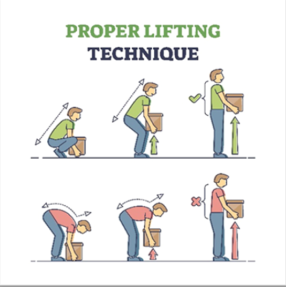
Many jobs involve a great deal of manual lifting; therefore it is important to know the steps and techniques involved in proper lifting to reduce injuries. These techniques include:
- Get as close to the load as possible
- Use a well-balanced stance, feet shoulder-width apart, and one foot slightly ahead of the other
- Bend at the knees and grip the object with the palms of the hands and fingers
- Tighten your stomach muscles
- Keep your lower back in its normal curved position and use your legs to lift
- To change direction, shift the foot position and turn the whole body
- And, lower the load using the same methods for lifting just in reverse
Hazard to Avoid When Lifting
Workers should take their time while lifting heavy weights. It is more likely to get injured when the body is tired or cold. There are several hazards you should avoid when lifting, including:
- Twisting or turning the body while lifting a load
- Attempting to carry a load that is too heavy or too large
- Lifting an object above shoulder level
- Bending forward rather than squatting
- Using a partial grip with only 1-2 fingers
- Lifting or working while fatigued
- Obstructing the vision while carrying a load
- Rushing through the process
- And, holding your breath
Conclusion
Proper lifting and carrying techniques are essential for employees who handle materials manually. Back, neck, and shoulder injuries are among the most common workplace injuries. By planning each lift, knowing your route, and using correct lifting methods, you can significantly reduce the risk of these injuries.

Brooklyn Nice
Brooklyn Nice is a Content Development Specialist at JJ Safety, where she creates engaging, OSHA-focused safety content, training materials, and educational resources for workers and employers. She has earned her OSHA 10 Certification, providing her with a strong foundation in workplace safety principles and industry best practices.