
Black ice is one of the most dangerous winter hazards because it is nearly invisible and often unexpected. Forming when moisture freezes on roadways, sidewalks, and work surfaces, black ice blends seamlessly with pavement, giving the illusion of safe conditions. Each year, it contributes to countless slips, falls, and vehicle accidents, often catching even experienced drivers and workers off guard.
What is Black Ice?
Black ice forms when moisture from rain, melting snow, or fog freezes onto cold surfaces, most often when temperatures are near or below freezing and when the ground cools faster than the surrounding air.
It is commonly found during early morning or nighttime hours, on bridges and overpasses, in shaded locations with little sunlight, and near bodies of water or low-lying areas.
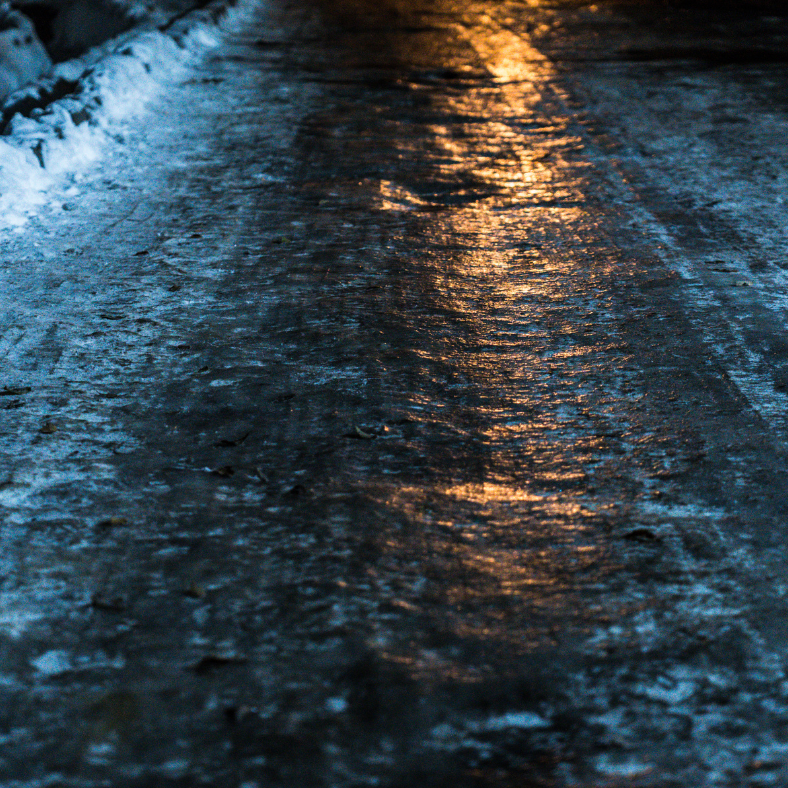
Despite the name, black ice doesn’t actually appear black. It:
- Appears clear, glossy, or wet-looking
- Blends in with dark pavement, making the road look slightly damp
- Lacks the white, frosty appearance of snow or visible ice
- And, often looks like a shiny patch or reflection on the surface
Because black ice can’t be easily seen, people often don’t realize it’s there until they lose traction.
Driving Awareness
Black ice presents a serious hazard for drivers by causing a sudden loss of traction that can lead to sliding or spinning out of control. Common risks include reduced vehicle control, increased likelihood of accidents, and unexpected road conditions that offer little warning.
If your vehicle hits black ice and you begin to slide or spin:
- Stay calm and do not slam on the brakes
- Ease off the gas pedal
- Steer in the direction you want the vehicle to go
- Maintain a safe distance
- Use brakes carefully, if needed
- Stay aware of other hazards
- And, pull over safely, if needed
To reduce the risk of accidents on black ice:
- Reduce your speed
- Increase following distance
- Avoid sudden maneuvers
- Use winter tires
- And, stay alert
Walking Awareness
Walking surfaces such as sidewalks, parking lots, and stairways can become dangerously slippery, creating hazards that increase the risk of slips and falls, loss of balance, and injuries such as sprains and fractures.
To reduce the risk of accidents when walking:
- Wear proper footwear for weather conditions
- Walk slowly and carefully
- Use handrails on stairs or ramps
- Pay attention to the ground and where you’re walking
- And, keep pathways clear of obstructions
Conclusion
Black ice is a serious winter hazard that can affect both drivers and pedestrians. By understanding how to identify black ice, recognizing the hazards, and implementing preventive measures, injuries and accidents can be significantly reduced.

Brooklyn Nice
Brooklyn Nice is a Content Development Specialist at JJ Safety, where she creates engaging, OSHA-focused safety content, training materials, and educational resources for workers and employers. She has earned her OSHA 10 Certification, providing her with a strong foundation in workplace safety principles and industry best practices.