
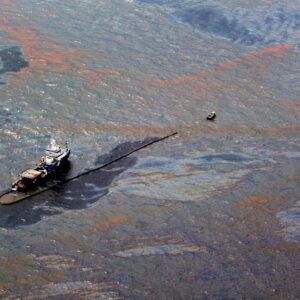
Oil spills are one of the most damaging environmental disasters, with the potential to devastate marine ecosystems, harm wildlife, and disrupt local economies. Whether caused by tanker accidents, pipeline leaks, or drilling incidents, these events require swift, coordinated action to minimize their impact.
Preparedness
When it comes to preparedness, there are 4 main categories, including:
- Plan
- Equip
- Train
- And, Exercise
→ Plan
Table 3 summarizes information about oil spill response planning under USCG, EPA, PHMSA, and BSEE regulations. The Table also identifies the regulatory requirements for these oil spill response plans.
An oil spill response plan typically identifies the number of workers required to mobilize and operate the oil spill response equipment at each site. Workers must have the qualifications and training required for their position within the response organization. Additionally, the oil spill response plan includes worker safety and health provisions for emergency response, recovery, and cleanup.
Hazardous Waste Operations and Emergency Response (HAZWOPER)
Employers whose workers will be involved in emergency response operations for releases of, or substantial threats of releases of, hazardous substances regardless of the location of the hazard must comply with OSHA's Hazardous Waste Operations and Emergency Response (HAZWOPER) standard - 29 CFR 1910.120 and 29 CFR 1926.65. This may include emergency response and post-emergency response cleanup following an oil spill incident.
Additionally, OSHA provides further information on HAZWOPER coverage for volunteers.
Health and Safety Plans
For an oil spill emergency, employers must develop and implement a site-specific Health and Safety Plan (HASP). For larger oil spills, it is recommended that HASPs are coordinated and consistent among various sites, as appropriate.
Under the HAZWOPER standard (29 CFR 1910.120(b)(4)(ii)), employers are required to develop a comprehensive Health and Safety Plan (HASP) to protect workers involved in oil spill cleanup operations. The HASP outlines site-specific hazards and the necessary controls to ensure the health and safety of all personnel. It serves as a critical guide for employers and workers during response efforts, helping to prevent the spread of contamination, as well as avoid injuries and fatalities.
Employers must keep the HASP on-site and ensure it is readily available and easily accessible to all involved parties, including workers, contractors, subcontractors, OSHA representatives, and other regulatory agencies such as the EPA.
→ Equip
Employers of emergency response and recovery workers are responsible for ensuring that their workers have, and properly use, Personal Protective Equipment (PPE) when necessary. PPE can include respiratory protection, protective clothing, and protective barriers used to protect workers from exposure to oil, oil by-products, dispersants, detergents, degreasers, and other safety and health hazards.
→ Train
An effective and safe oil spill response depends on all involved personnel having the necessary skills and knowledge for their specific roles. Every worker with a designated role in the response organization must receive appropriate training. This includes training for managers to understand response management processes and make informed, strategic decisions. Field managers and emergency response personnel must be trained in the proper deployment and safe operation of response equipment, as well as in hazard recognition and the implementation of protective measures during cleanup activities.
→ Exercise
Exercises provide a valuable opportunity to test and validate the response strategies outlined in response and contingency plans. As a best practice, employers should design exercises that include hands-on drills and simulations to assess worker safety procedures, test equipment functionality, and reinforce health and safety protocols in real-world scenarios.
There are different types of exercises, including:
- Drills
- Functional Exercises
- And, Full-Scale Exercise
For more information on oil spill preparedness, visit OSHA's webpage.
Response
Oil spill emergencies can create serious health and safety risks for workers in affected areas. Those working near the spill site may be directly impacted, requiring evacuation or sheltering in place. Response, cleanup, and recovery workers, especially those involved in stopping or containing the spill, face increased risks, including fires, oxygen deficiency, exposure to carcinogens and other chemicals, temperature extremes, and hazards from heavy equipment. Both response personnel and nearby workers should be trained and prepared to act appropriately during an oil spill or related emergency.
A coordinated and consistent air sampling plan should be a core part of any oil spill emergency response. This plan must cover all response worksites and involve collaboration between the responsible party, government agencies, NGOs, and their contractors. Comprehensive exposure assessments should account for the wide range of work environments, each with unique exposure risks.
Oil spill response, recovery, and cleanup workers may require various types of Personal Protective Equipment (PPE). However, engineering and administrative controls should be the first line of defense to reduce or eliminate exposure risks. When these controls are not sufficient, PPE becomes essential. Selecting the appropriate PPE starts with answering two key questions, including:
- What hazards does the worker or volunteer face in this role?
- What is the expected level of exposure to those hazards during the job?
Many response tasks will require gloves, protective clothing, and footwear. Materials like neoprene, nitrile, and butyl rubber, as well as other commercial products, can offer protection against crude oil. PPE should be evaluated before use by consulting manufacturers to ensure it provides adequate barrier protection for expected exposures. For eye and face protection, safety glasses, goggles, or face shields may be needed, depending on the task.
For further information on response, visit OSHA's webpage.
Conclusion
Effective preparedness and response to oil spills are critical for protecting both the environment and worker health and safety. From proper training and the use of personal protective equipment to coordinated air monitoring and hazard assessment, every aspect of a response must be carefully planned and executed.

Brooklyn Nice
Brooklyn Nice is a Content Development Specialist at JJ Safety, where she creates engaging, OSHA-focused safety content, training materials, and educational resources for workers and employers. She has earned her OSHA 10 Certification, providing her with a strong foundation in workplace safety principles and industry best practices.