
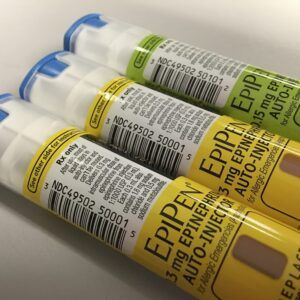
Allergic reactions can occur suddenly and without warning and when they do, every second counts. An epinephrine auto-injector, commonly known as an EpiPen®, is a lifesaving device designed to treat severe allergic reactions, also known as anaphylaxis. Whether caused by food, insect stings, medications, or environmental triggers, anaphylaxis is a medical emergency that requires immediate response.
In this blog, we’re covering everything you need to know about this lifesaving device!
What is an EpiPen?
An EpiPen is a pre-filled, single-use injector designed to deliver a precise dose of epinephrine, a fast-acting form of adrenaline. When administered, the epinephrine constricts blood vessels and opens the airways in the lungs, helping to quickly counteract severe allergic reactions, including swelling, hives, and difficulty breathing.
Anaphylaxis can develop rapidly, often within minutes and can be fatal if untreated. EpiPens are designed to reduce the severity of a reaction and buy time until emergency medical services arrive and tend to the victim.
The main purpose of an EpiPen is to treat anaphylaxis, a severe allergic reaction that can occur in response to allergens such as:
- Foods, including peanuts, shellfish, milk, and eggs
- Insect stings or bites from bees, wasps, hornets, etc.
- Medications, such as antibiotics, aspirin, or anesthesia
- Or, latex or other environmental allergens
Symptoms of anaphylaxis may include swelling of the face, difficulty breathing, dizziness, hives, vomiting, or a sudden drop in blood pressure.
How to Use an EpiPen
Typically, a victim can usually self-administer an EpiPen, but in severe cases like difficulty breathing, fainting, confusion, loss of coordination, or unconsciousness, self-administration may not be possible. Understanding how to use an EpiPen correctly is crucial to not only the victim’s safety, but yours.
While formal training on how to use an EpiPen is not legally required, it is strongly recommended. Proper training helps prevent mistakes, ensures the medication is administered effectively, and can make the difference between saving a life and putting yourself or others at risk.
If someone does not know how to use an EpiPen, there are a few risks that can occur, such as:
- Delayed or ineffective treatment
- Accidental self-injection; this is a common error that occurs when the administrator injects their own finger or hand on accident due to holding the device the wrong way
- Injection in the wrong body part; the device is designed for the outer thigh. Incorrect injection sites such as the hands, feet, buttocks, arm, or stomach can cause harm or prevent proper absorption
- Injection through clothing; EpiPens can go through clothing but improper aim or hesitation can cause misfiring or partial dosing
- And, device misuse; this includes failing to remove the safety cap, holding it upside down, not holding the device in place long enough, or using an expired device
To safely use an EpiPen:
- Stay calm and act quickly
- Remove the device from its carrier tube
- Remove the safety cap; in most cases it’s a blue cap
- Press the orange tip firmly into the outer thigh; some EpiPen models are designed to be applied with a quick, forceful motion
- Hold the device in place for 3 seconds
- Call 911 immediately
- And, administer a second dose if symptoms return or worsen after 5-15 minutes using a new injector
Conclusion
EpiPens are powerful, life-saving tools, but their effectiveness depends on proper handling, correct use, and timely action. Knowing when to give epinephrine, how to use the device, and what mistakes to avoid can save lives. Whether you carry an EpiPen or work around someone who does, staying informed and practiced ensures you’re ready in an emergency.

Brooklyn Nice
Brooklyn Nice is a Content Development Specialist at JJ Safety, where she creates engaging, OSHA-focused safety content, training materials, and educational resources for workers and employers. She has earned her OSHA 10 Certification, providing her with a strong foundation in workplace safety principles and industry best practices.