
Blasting work is essential in construction, mining, and demolition, but it carries serious hazards. Whether you're dealing with flyrock, toxic fumes, or the explosive force itself, one thing is clear: blasting should only be done by trained, qualified personnel.
In this blog post, we'll break down the hazards, definitions, and most importantly, the safety measures every crew must follow when working with explosive or blasting agents.
Understanding Blasting Hazards
An explosion produced a blast wave, which varies in intensity. High-intensity blasts can tear human tissue, while less intense ones can still damage eardrums, lungs, and internal organs.
Common hazards include:
- Flyrock: Objects propelled beyond the blast zone
- Misfires: Unintended failure of a blast to ignite as planned
- And, Toxic Fumes: Gases produced during demolition that can harm respiratory health
Key Definitions
Understanding the terminology around blasting is critical for safe operations:
- Blasting Agent: A mixture of fuel and oxidizer used for blasting
- Explosives: Chemical compounds or devices that detonate or deflagrate when triggered
- And, Flyrock: Any object, such as rock, mud, water, or debris, that travels beyond the blast area
For more terminology, refer to CFR 1910.209.
Types of Explosives
There are three fundamental types of explosives, including:
- Mechanical Explosives: These depend on physical reactions, such as over-pressurizing a container with air
- Nuclear Explosives: Trigger sustained nuclear reactions, releasing massive energy
- And, Chemical Explosives: These are the most common on job sites and include Detonating Explosives and Deflagrating Explosives
Primary vs. Secondary Explosives
Detonating explosives are subdivided into two categories: primary and secondary. Some explosives can be considered both primary and secondary, depending on the conditions of use. Primary explosives are easily ignitable by sources, such as a flame, spark, or other means that will produce heat of sufficient magnitude. Secondary explosives require a detonator and possibly a booster.
Safe Blasting Practices
To reduce risks, it is advised to follow safe practices, including:
→ Before the Blast
- Clear the area of all workers or use a blast shelter
- Establish signals, such as early warning, final warning, and all-clear
- And, know your surroundings by staying alert and planning ahead
→ During the Blast
- Use technology, such as face profilers or borehole probes, to map the site
- Communicate with the driller and review the blast plan
- Barricade access routes and remove all personnel from the area
- And, give ample warning before detonation
→ After the Blast
- Perform a post-blast inspection to ensure safety prior to reentry
Storage and Transportation of Explosives
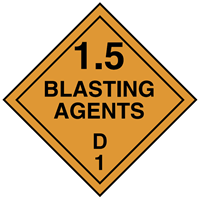
Clearly label explosive storage sites with visible warning signs that are visible from every approach. Store all explosive materials in approved, secure magazines designed for that purpose. Restrict access to these storage areas exclusively to authorized personnel to ensure safety and comply with regulations.
Do not transport blasting caps with other explosives, unless fully compliant with DOT regulations 49 CFR Parts 177-180. Certain materials are completely banned from transportation; check regulations prior to moving any explosive materials.
Preventing Ignitions and Explosions
Underground coal mines are especially vulnerable to explosions. There are a few key sources of ignition, including:
- Electrical arcs
- Sparks
- Detonation of other explosives
- And, friction from malfunctioning equipment
Preventative maintenance and inspections are essential to avoid catastrophic events.
Safety Checklist for Workers
To maintain a safe work environment and prevent explosive-related incidents, workers must consistently follow best practices. The checklist below can help workers apply critical safety measures throughout every phase of handling, storing, and using explosives on the job site.
✔ Follow manufacturer’s guidelines
✔ Keep explosive areas clean and dry
✔ Use oldest inventory first (FIFO)
✔ Never use deteriorated explosives
✔ Ventilate areas before re-entry
✔ Understand site geology and conditions
✔ Remove all personnel before blasting
✔ Secure and barricade blast zones
✔ Provide clear warnings
✔ Inspect the site post-blast
Conclusion
Blasting work is dangerous, but workers can prevent accidents through clear communication, preparation, and strict adherence to safety protocols. Encourage all workers to report hazards, follow posted signs, and use inspection checklists regularly.
Need more info on blasting safety? Refer to OSHA standards 29 CFR 1926 SubPart U and 49 CFR for DOT transport regulations.

Brooklyn Nice
Brooklyn Nice is a Content Development Specialist at JJ Safety, where she creates engaging, OSHA-focused safety content, training materials, and educational resources for workers and employers. She has earned her OSHA 10 Certification, providing her with a strong foundation in workplace safety principles and industry best practices.