
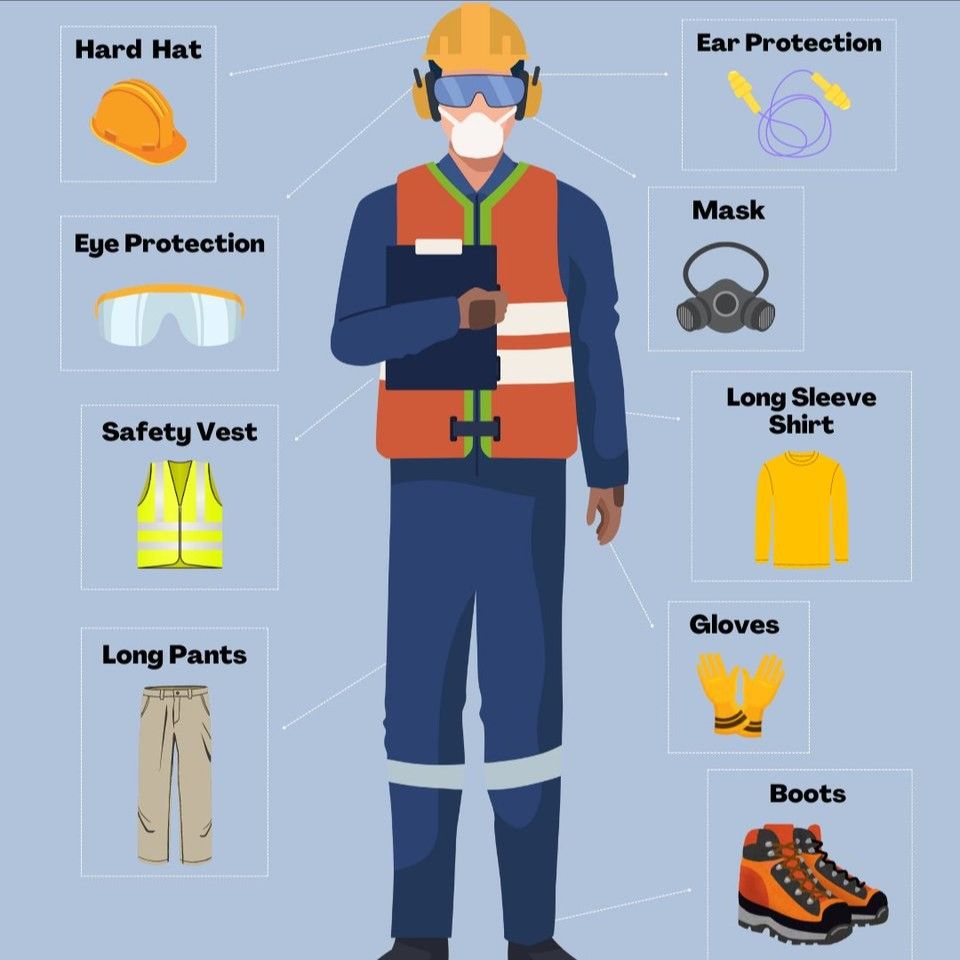
Personal Protective Equipment (PPE) is one of the most visible parts of any safety program. Hard hats, gloves, respirators, and face shields, they’re often the first thing people associate with workplace safety. But simply wearing PPE doesn’t guarantee protection.
Misunderstandings about PPE can lead to overconfidence, misuse, and serious injuries. In this blog, we’re breaking down some of the most common myths and what workers need to understand instead.
Myth #1: “If I’m Wearing PPE, I’m Completely Safe.”
PPE is the last line of defense, not the first! It does not eliminate hazards, it only reduces exposure when other controls are not possible.
The most effective safety programs follow the hierarchy of controls:
- Eliminate the hazard
- Substitute safer alternatives
- Implement engineering controls
- Apply administrative controls
- And, use PPE as the final barrier
Agencies like OSHA emphasize that PPE should not replace safer engineering solutions. Wearing gloves doesn’t make a dangerous chemical safe, just like a harness doesn’t remove the fall hazard. PPE is protection, not permission to to take risks.
Myth #2: “All PPE Is The Same.”
Not all PPE is created equal. Different tasks require different levels and types of protection. For example:
- Cut-resistant gloves vary in protection ratings
- Respirators must match the specific airborne hazard
- And, safety glasses may not provide adequate splash protection
Using the wrong type of PPE can be just as dangerous as not wearing any at all. Selection must be based on hazard assessment, not convenience.
Myth #3: “If It Looks Fine, It’s Good To Use.”
Damage to PPE isn’t always visible or obvious. Small cracks in hard hats, worn harness stitching, or degraded respirator seals can significantly reduce effectiveness.
Workers should always:
- Inspect PPE before each use
- Check expiration dates where applicable
- And, remove damaged equipment from service immediately
Relying on appearance alone can create a false sense of security.
Myth #4: “PPE Is Only Required When Safety Is Watching.”
This mindset is one of the most dangerous cultural issues in the workplace. PPE is not just about compliance, it’s about survival.
Inconsistent use often leads to:
- Increased injury rates
- Normalization of unsafe behaviors
- And, peer pressure to cut corners
A strong safety culture means wearing required PPE every time, regardless of who’s watching.
Myth #5: “If It’s Uncomfortable, I Can Skip It.”
Discomfort is one of the most common excuses for not wearing PPE. Ill-fitting gear, heat, or limited visibility can make tasks more challenging. But skipping protection exposes workers to much greater risk.
Instead of removing PPE:
- Report fit or comfort issues
- Request properly sized equipment
- Or, explore alternative models that meet safety standards
Modern PPE designs offer more ergonomic options. The solution should be adjustment, not avoidance.
Myth #6: “Training Once Is Enough.”
PPE training is not a one and done requirement. Over time, workers may forget proper procedures, develop shortcuts, misuse equipment unintentionally, or be introduced to new protective equipment.
Training and refresher training should cover:
- When PPE is required
- How to properly wear and adjust it
- Limitations of the equipment
- And, proper cleaning and storage procedures
Understanding the limitations is especially important. For example, respirators require medical evaluation and fit testing, wearing one incorrectly can be ineffective or harmful.
Conclusion
PPE plays a critical role in workplace safety, but only when workers understand how and why it’s used. Employers must provide proper hazard assessments, training, and equipment that fits correctly. Workers must take responsibility for consistent and correct use.
When myths are replaced with knowledge, PPE becomes what it’s meant to be: a reliable last line of defense, not a false sense of security.

Brooklyn Nice
Brooklyn Nice is a Content Development Specialist at JJ Safety, where she creates engaging, OSHA-focused safety content, training materials, and educational resources for workers and employers. She has earned her OSHA 10 Certification, providing her with a strong foundation in workplace safety principles and industry best practices.