
For many employers, an OSHA inspection can result in more than just a citation, it can lead to significant financial penalties, increased insurance costs, damaged client relationships, and challenges with contractor prequalification. Understanding OSHA's penalty structure is essential for protecting both your workforce and your business.
In 2026, OSHA continues to enforce workplace safety standards through a system of citations and penalties designed to encourage compliance and deter unsafe practices. While the maximum penalty amounts remain the same as 2025, there are some notable changes to OSHA's penalty policies that employers should understand.
Did OSHA Increase Fines for 2026?
Typically, OSHA adjusts penalty amounts annually for inflation. However, OSHA announced that there would be no inflation-based increase for 2026, meaning the maximum penalty amounts from 2025 remain in effect throughout 2026.
Current maximum OSHA penalties for 2026 include:
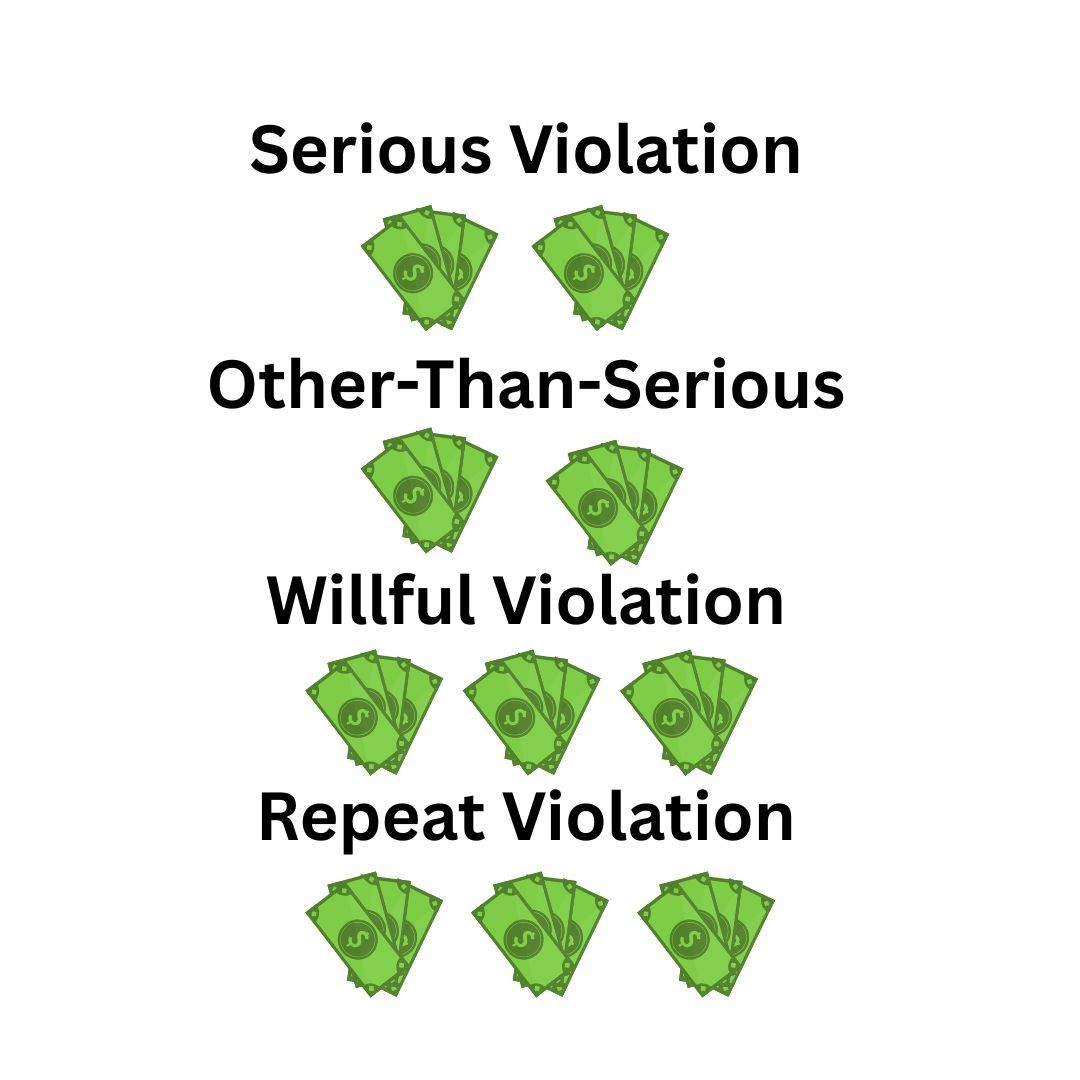
- Serious Violation - $16,550 per violation
- Other-Than-Serious Violation - $16,550 per violation
- Posting Requirements Violation - $16,550 per violation
- Failure to Abate - $16,550 per day beyond the abatement date
- Willful Violation - $165,514 per violation
- And, repeat Violation - $165,514 per violation
These amounts can add up quickly when multiple violations are identified during a single inspection.
Serious Violations
A serious violation occurs when a workplace hazard could reasonably cause death or serious physical harm, and the employer knew, or should have known, about the hazard. OSHA does not need an injury to occur to issue a serious citation. The existence of a significant hazard is enough.
Common examples include:
- Employees working without required fall protection
- Unguarded machinery
- Electrical hazards
- Inadequate lockout/tagout procedures
- Or, missing required Personal Protective Equipment (PPE)
OSHA may assess lower amounts depending on factors such as company size, history, and good-faith efforts toward compliance.
Other-Than-Serious Violations
Other-than-serious violations are directly related to workplace safety and health but are unlikely to cause death or serious physical harm.
While these violations may seem minor, they can still result in citations and financial penalties. OSHA often uses these citations to address documentation, recordkeeping, or administrative shortcomings.
Common examples include:
- Incomplete OSHA logs
- Missing safety posters
- Deficient training records
- Inadequate documentation of inspections
- Or, administrative safety program deficiencies
OSHA may choose not to assess a monetary penalty depending on the circumstances.
Willful Violations
Willful violations are among the most severe citations OSHA can issue.
A willful violation occurs when an employer intentionally disregards OSHA requirements or demonstrates plain indifference toward employee safety. In these situations, OSHA believes the employer was aware of the requirement and consciously chose not to comply.
Common examples include:
- Directing employees to work at heights without fall protection despite known requirements
- Ignoring repeated safety complaints
- Deliberately bypassing machine guards
- Or, failing to correct hazards that management knows exist
OSHA can issue multiple willful citations during a single inspection, dramatically increasing total penalty exposure.
Repeat Violations
A repeat violation occurs when OSHA identifies a substantially similar violation that the employer has been cited for previously.
Repeat violations demonstrate a failure to learn from past enforcement actions and are treated much more seriously than first-time violations.
Common examples include:
- Repeated fall protection violations
- Multiple lockout/tagout deficiencies across inspections
- Recurring machine guarding issues
- Or, repeated PPE noncompliance
A repeat citation can often cost ten times more than a standard serious violation.
Failure-to-Abate Violations
After OSHA issues a citation, employers are typically given a deadline to correct the hazard. Failure-to-abate penalties occur when the employer does not fix the cited issue by the required date.
Common examples include:
- Failure to install required machine guards
- Failure to repair fall protection systems
- Failure to update required safety procedures
- Or, failure to implement corrective actions following a citation
The maximum penalty for this type of violation is $16,550 for every day the violation remains uncorrected beyond the abatement date. This means even a relatively simple correction can become extremely expensive if ignored.
Posting Requirement Violations
OSHA requires employers to display certain notices and provide employees with information regarding their workplace rights. Failure to meet these requirements can result in a posting violation.
Common examples include:
- Failure to display the OSHA Job Safety and Health poster
- Missing required injury and illness summaries
- Or, failure to post citation notices
How 2026 Differs from 2025
Many employers expected another inflation adjustment in 2026. However, OSHA announced that the 2025 maximum penalty amounts would remain unchanged throughout 2026.
Although the maximum penalties did not increase, OSHA did make changes to its penalty reduction policies. Small employers may qualify for larger reductions based on company size, inspection history, and good-faith efforts to comply. OSHA expanded certain reduction opportunities for employers with up to 25 employees and increased some history-related reductions. These policy adjustments may lower proposed penalties for qualifying employers.
The Real Cost of an OSHA Citation
While OSHA penalties can be substantial, the financial impact often extends far beyond the citation itself.
Employers may also experience:
- Increased workers' compensation premiums
- Higher EMR ratings
- Lost productivity
- Project delays
- Legal expenses
- Reputational damage
- Difficulty maintaining contractor prequalification status
- Or, lost bidding opportunities with clients and general contractors
In many cases, the indirect costs associated with an OSHA citation can exceed the penalty itself.
Conclusion
Although maximum penalty amounts did not increase from 2025, employers should not view this as a reason to relax their safety efforts.
The most effective way to avoid OSHA penalties is to build a proactive safety program, maintain accurate documentation, provide ongoing employee training, and address hazards before they result in citations or injuries. A strong safety culture not only protects workers, it also protects the long-term success of your business.

Brooklyn Nice
Brooklyn Nice is a Content Development Specialist at JJ Safety, where she creates engaging, OSHA-focused safety content, training materials, and educational resources for workers and employers. She has earned her OSHA 10 Certification, providing her with a strong foundation in workplace safety principles and industry best practices.