
There's a tier of work available to contractors in this country that most contractors don't even know exists.
I’m talking about contracts with the largest industrial companies in the world, like Chevron, Shell, and Amazon distribution centers to name a few. The kind of clients that, if you land one, can change the course of your entire business, your life, and the life of your employees.
Here's the thing most contractors don't understand: these companies don't just call you because you submitted a bid. They have a list. A vetted, approved contractor list. And to get on that list, you have to go through a process called prequalification.
Prequalification is how billion-dollar companies decide which contractors they trust to work on their jobsites. The contractors who understand it, who invest in building a compliant, audit-ready business, have access to a level of work their competitors simply cannot reach.
This blog will explain what prequalification is, how it works, what the major platforms are, and most importantly, how to build your business in a way that makes your company stand out to the biggest hiring clients in your industry.
Our company, JJ Safety LLC, has helped thousands of contractors navigate the prequalification process across dozens of platforms, and more importantly, we’ve seen what happens to the businesses that do it right.
We’ve seen small contractors go from working exclusively with local general contractors to landing contracts with national operators. We’ve seen companies double their revenue because they qualified for clients their competitors couldn’t serve. And we’ve seen contractors lose contracts they held for years because they let their compliance slip.
The prequalification process is not meant to be a burden, it’s meant to be a business asset. Once you understand it that way, everything about how you approach your company’s compliance changes!
What is Contractor Prequalification?
Contractor prequalification is the process large hiring companies use to verify that a contractor meets established standards for safety, insurance, and operational capability before work begins on-site.
Here’s why it exists. When a Fortune 500 company or major corporation operates an oil refinery, a manufacturing plant, or a national distribution network, they can’t afford to let just anyone onto that facility. One incident, whether that be a worker injury, an environmental violation, or an uninsured contractor causing property damage, can cost the hiring client millions of dollars, regulatory fines, or reputational damage.
So, the contractor prequalification process was created to pre-screen contractors before they ever make it onto the jobsite. Over the last 20 years, this process has formalized from simple questionnaires into sophisticated third-party platforms that track contractor performance in real time.
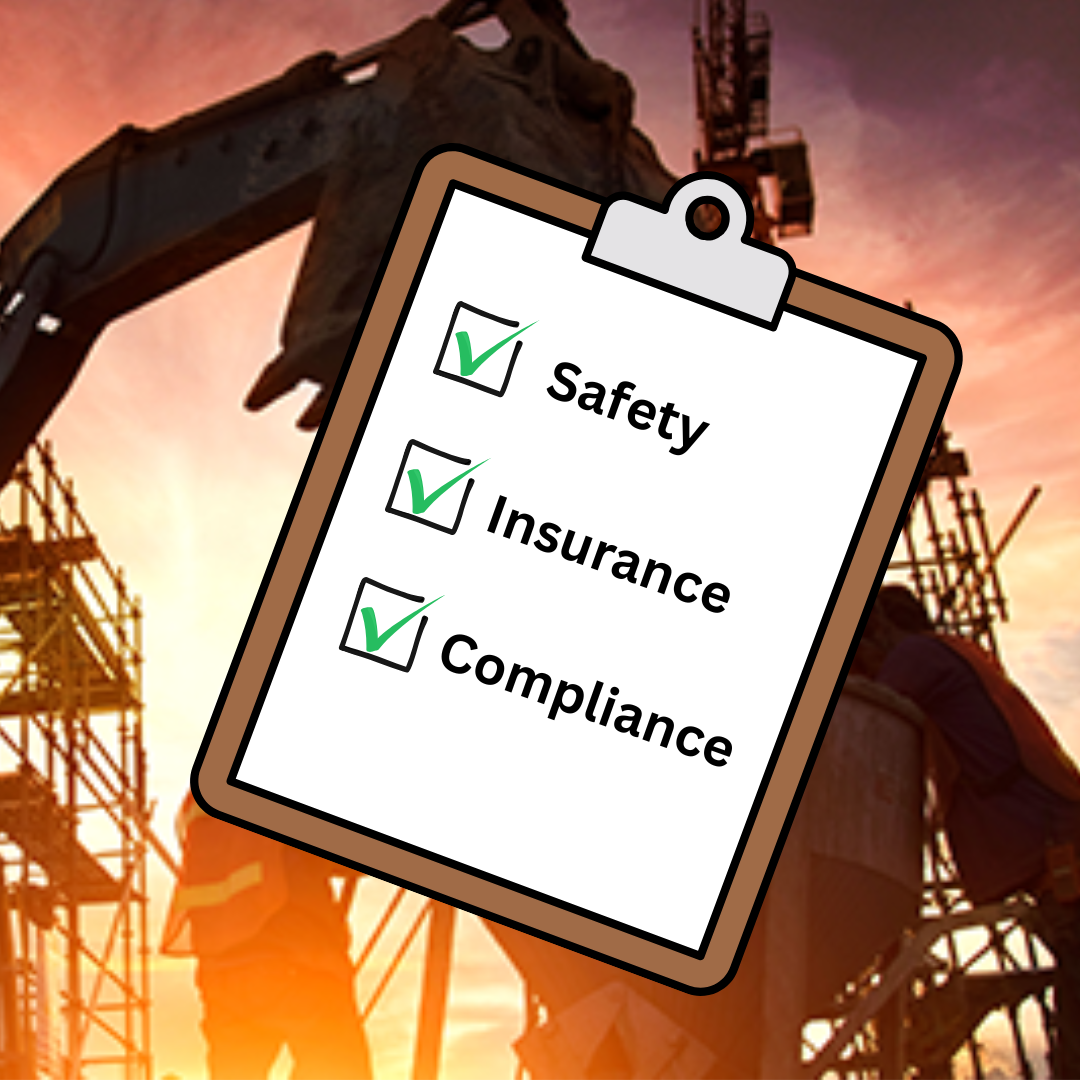
The main question about the prequalification process is “what exactly gets evaluated?” At a high level, every major platform looks at three categories, such as:
- Safety Performance: This includes your company’s historical injury rates like the TRIR, EMR, and DART, and OSHA records. This tells hiring clients if your company is a potential liability or not
- Insurance: Hiring clients want proof that your company carries the right insurance coverage. This helps protect them if something goes wrong, which is why insurance is a key part of the prequalification process
- And, Operational Readiness: This includes written safety manuals, trained employees, and documented procedures. This tells the hiring client whether you have the management systems and safety compliance in place to operate safely. This is why it’s important for safety manuals and procedures to be tailored to the company’s actual scope of work rather than relying on generic material that may not apply to the work being performed
Every major platform evaluates these three things, but they may do it in different ways, with different interfaces, at different price points, serving different industries. Which brings us to the platforms themselves!
The Platforms
When contractors talk about prequalification, three names come up most often. And then there are hundreds more that most people have never heard of. So let’s dive into the big world of prequalification platforms.
ISNetworld® is the largest and most widely used contractor management platform in the world. Originally built for the oil and gas sector, it has expanded into utilities, chemical processing, manufacturing, and beyond. It uses a letter-grade scoring system, A-F, which is evaluated differently by each hiring client. If you do any kind of industrial work, ISNetworld® is the platform you’re most likely to encounter.
Avetta® started as PICS and merged with Browz into what it is today, a global platform used by over 1,000 hiring clients including large manufacturers, energy companies, retailers, and facility management companies. It uses a color-coded grading system that is based on many factors uploaded and reviewed during the prequalification process. If your clients include national manufacturers or large consumer-facing brands, Avetta® is probably on your radar.
Veriforce® ONE is a unified platform that brings together several prequalification and compliance solutions from Veriforce®, including Verisource®, CompliancePro®, and others, into a single, streamlined system. Veriforce® remains the dominant platform in the pipeline and midstream, energy sector.
Veriforce® also manages different training programs outside of the prequalification process, like PEC Core Compliance, SafeLand, and SafeGulf. These are standardized safety training programs designed for the oil and gas industry and managed by Veriforce® to ensure contractors meet operator safety requirements. SafeLandUSA covers onshore, SafeGulf covers offshore, and PEC Core Compliance is an intensive, 3-day, high level training that covers both SafeLand and SafeGulf to keep worker certifications up to date.
If you work in pipelines, gathering systems, or upstream energy, Veriforce® is one of the primary platforms operators use to manage contractor compliance. Its industry-standard training requirements, like PEC Core Compliance and SafeLandUSA, are especially common in the oil and gas sector.
The Broader Ecosystem: Hundreds More
Here’s what most contractors don’t realize. ISNetworld®, Avetta®, and Veriforce® are the most well-known platforms, but they are far from the only ones. There are well over a hundred prequalification and contractor management systems used by hiring clients across the country.
Every major hiring client has a system. That system may be ISNetworld® or one you’ve never heard of, like the National Compliance Management Service (NCMS) or DISA Global Solutions. When a client requires prequalification, you’ll typically receive a notice or letter indicating which platform you need to register with. In some cases, the platform itself will reach out directly, explaining that the hiring client uses their system and registration is required to proceed.
This is one of the reasons experienced compliance professionals are so valuable: they’ve already navigated dozens of these platforms and know exactly what each one needs.
Prequalification as a Growth Strategy
If there’s one thing to take away from this blog, it’s this:
Most contractors think about prequalification as a cost of doing business. A compliance burden. Something to get done and forget about until it becomes a problem again. But the truth is, that mindset is what’s costing you money!
The contractors who win the biggest contracts in their industry treat the prequalification process differently. They position themselves as a qualified, low-risk contractor by treating prequalification and compliance as an ongoing, proactive process rather than a one-time requirement.
Think about it this way. When a Fortune 500 company or major corporation needs to hire a contractor, they don’t put an ad on Craigslist. They go to their approved vendor list. If you’re not on that list, you don’t exist to them. It doesn’t matter how good you are or how competitive your price is, you’re not in the conversation.
The contractors on those approved lists got there by doing exactly what we’ve been talking about. They built the right systems, they maintained a compliant prequalification portal, and they showed up in the database when the client went looking.
Here’s what being both prequalified and compliant can do for your business:
- It can open doors to competitors who aren’t on the approved vendor list
- It allows you to bid on high-margin work
- It creates stability. An approved vendor relationship with a major operator can mean years of recurring work, not just one-off projects, that is if you keep your prequalification portal up-to-date and don’t let it slip out of compliance
- It makes your business more valuable. A company with documented safety systems, strong injury rate metrics, and active prequalification accounts is worth more to a potential buyer or partner than a company without those systems
- And, it builds internal discipline. Building the systems required for the prequalification process, like safety manuals, training tracking, and incident reporting, make your company operationally better, not just compliant
JJ Safety LLC has watched this play out with contractors we’ve worked with. A company that was grinding on local commercial accounts or competing on prices with a dozen other contractors, get their prequalification dialed in and 12 months later they’re on the approved vendor list. The work is steadier, the margins are better, and the client relationships are stronger and more sustainable.
Future-Proofing Your Business
If you're reading this and thinking “I want to be the contractor that's on that approved vendor list,” here's what you need to start building now, even before a client requires it of you.
Create a Safety Culture Before Anyone Asks For It
Contractors who consistently perform well in prequalification are typically those who have built safety into the foundation of their operations, not treated it as a response to a problem. Strong safety performance is the result of having the right systems, leadership, and accountability in place long before any platform review begins.
A true safety culture starts with management setting clear expectations and reinforcing them consistently in the field. That includes having written safety policies that reflect the actual scope of work, providing role-specific training, and ensuring supervisors are actively enforcing procedures on job sites. It also means establishing consistent processes for hazard identification, near-miss reporting, incident investigation, and corrective action, so issues are addressed early, not after they become trends.
Metrics like the TRIR and EMR are not the starting point, they are the outcome of these day-to-day practices. Low incident rates and strong insurance history reflect a workforce that is trained, supervised, and supported to work safely over time, not something that can be corrected quickly when prequalification is required.
Compliance platforms don’t create safety performance; they verify what already exists. That’s why a safety culture has to be built intentionally through leadership, structure, and consistent execution in the field.
If that approach hasn’t been in place yet, the time to start is now. Safety culture isn’t just about meeting qualification requirements, it’s about protecting people, strengthening operations, and doing things the right way from the beginning.
Build a Written Safety Manual That Actually Reflects Your Work
Every major prequalification platform requires a written safety manual. But here's the thing, the contractors who get ahead don't just write a safety manual that satisfies the compliance requirements. They write a manual their foremen will actually use that’s within their scope of work.
A safety manual that’s just sitting on the shelf but not actually being implemented or relevant to the work is a liability waiting to happen. A safety manual that your team actually references, that was written for the specific hazards of your work scope, is both a compliance asset and a genuine operational tool.
JJ Safety LLC see’s the difference constantly. Contractors who hand us a real safety manual sail through the platform review, where contractors who hand us a generic template from the internet go back and forth with compliance reviewers for weeks. That’s why we have a dedicated content team that develops customized manuals designed to meet platform requirements and improve approval success.
Get Your Insurance Right Before You Need It
Many small contractors are underinsured by the standards of large industrial clients. General liability limits that work for local commercial work often fall short of what a Fortune 500 company or major corporation requires. Umbrella coverage requirements can be substantial.
Have a conversation with your insurance broker specifically about prequalification. Ask: “If I wanted to work with major oil and gas or manufacturing clients, what coverage do I need?” You may find you need to adjust your policy before you ever apply to a platform. And it's much better to make that adjustment proactively than to discover the gap when you're trying to close a deal.
Track Your Workers and Their Qualifications
As your company grows, one of the most important operational systems you can build is a simple employee qualification tracker. Every employee, every certification, every expiration date. OSHA 10, OSHA 30, CPR/First Aid, and any platform-specific training like PEC Safeland, are just a few examples of items contractors can track.
Prequalification platforms track individual workers, not just companies. The bigger you grow, the more critical it becomes to know exactly who is compliant and who has a gap, before a platform flags it.
Understand That Compliance Requirements Are Only Growing
The trend is moving in one direction: every year, more companies require prequalification, more platforms enter the market, and more industries adopt contractor management systems. Contractors who treat prequalification as a core business function today will be better positioned for long-term growth and future work opportunities.
The contractors who wait until a client forces their hand will spend their time in reactive mode, scrambling to get compliant under a deadline, paying more, taking longer, and potentially losing the contract while they figure it out.
Future-proofing means building the systems now so that when a new client requirement lands in your inbox, your answer is: “We're already on it.”
How JJ Safety Partners With Contractors
Everything we've talked about in this blog takes real work to implement. Managing prequalification accounts, maintaining compliance across multiple platforms, building safety manuals that actually pass review, tracking employee certifications, and responding to deficiency notices, is not a casual side task for a contractor who's running a crew and managing a business.
That's where JJ Safety comes in!
We work with contractors across multiple industries to manage their prequalification portal as an ongoing service, not just a one-time setup. Ongoing management. Here's what that looks like:
- We build or review your safety programs and ensure they satisfy the specific requirements of your target clients and platforms
- We manage your ISNetworld®, Avetta®, Veriforce®, and other platform accounts, handling submissions, clearing deficiencies, and responding to review requests
- We monitor your accounts weekly
- We prepare you for audits. If a client conducts their own contractor audit, we make sure your documentation is audit-ready before they ask
- And, we advise on growth strategy. If you’re trying to qualify for a new tier of clients, we can tell you exactly what gaps exist in your prequalification portal and what it will take to close them
We’ve worked with contractors at every stage, from those with no compliance infrastructure who needed to get qualified quickly, to those with solid systems in place looking to optimize compliance as a growth strategy. We’ve also supported large contractors managing complex, multi-platform requirements across dozens of employees, where scalability and consistency are essential.
Whatever stage your business is at, if prequalification is something you're serious about, we'd love to have a conversation.
Final Message
If this blog shifted how you think about the prequalification process, from a burden to a business strategy, then it did its job.
The contractors who treat prequalification as a competitive advantage are the ones who end up on the approved vendor lists that most contractors never even knew to apply for. The work is better, the clients are better, and the business is more stable.
We work with contractors at every stage of this journey. Whether you're trying to qualify for your first major platform, trying to understand why your grade or score isn't where it needs to be, or trying to build a compliance infrastructure that grows with your company, we can help.
If you want to have a real conversation about where your business stands and what it would take to get to the next tier of clients, visit our website and request a quote. No pitch. Just a straight assessment of where you are and what the path forward looks like.

Brooklyn Nice
Brooklyn Nice is a Content Development Specialist at JJ Safety, where she creates engaging, OSHA-focused safety content, training materials, and educational resources for workers and employers. She has earned her OSHA 10 Certification, providing her with a strong foundation in workplace safety principles and industry best practices.