
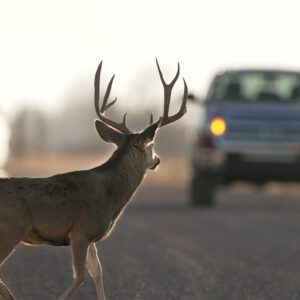
Deer strikes are a serious and often underestimated roadway hazard, especially in rural and suburban areas. Each year, thousands of drivers are injured and millions of dollars in damage occur when vehicles collide with deer. Understanding when and where deer are most active, and knowing how to react if one suddenly appears, can help reduce the risk of injury, vehicle damage, and secondary crashes.
Where and When
Deer are most active at dawn and dusk, when visibility is low and traffic is often heavier. Activity increases in the fall, especially during breeding season which occurs from October through December.
Deer are most commonly found:
- Along rural roads and highways
- Near wooded areas, fields, and farmland
- Close to water sources
- And, in suburban areas where development borders natural habitat
Deer-Vehicle Collisions
Deer-vehicle collisions pose significant risks to drivers, passengers, and surrounding traffic. When a deer enters the roadway unexpectedly, drivers often have little time to react. There are many dangers of striking a deer in a vehicle, including:
- Serious Injuries and Fatalities: Collisions with larger deer can cause severe crashes, particularly if the driver swerves into oncoming traffic
- Vehicle Damage: Strikes often cause major damage to the front end, windshield, and engine
- Secondary Hazards: Swerving to avoid deer can result in rollovers, collisions with trees, or crashes with other vehicles
- And, Unpredictable Behavior: Deer move in groups and often dart across the road unexpectedly
What To Look Out For
When driving, look out for:
- Deer Crossing Signs: Posted in high-traffic areas for a reason, take these signs seriously
- Roadside Movement: Flashing eyes or silhouettes near the shoulder of the road
- Seasonal Patterns: Fall and spring are peak times for deer activity
- And, Rural and Wooden Roads: Increased risk in areas with forest, fields, or near water
Safe Driving Tips
The following are best practices drivers can use to avoid or prevent deer strikes:
- Be extra alert during high-risk times
- Slow down in deer zones
- Use high beams at night
- Do not swerve
- Wear your seatbelt
- Honk if a deer is on the road
- And, be aware of your surroundings
Unavoidable Deer Strikes
If a deer strike is unavoidable, drivers should:
- Brake firmly, grip the wheel, and stay in your lane
- Pull over safely after the collision
- Turn on hazard lights to alert other drivers
- Do not approach the deer
- And, call local law enforcement to report the incident
Conclusion
Deer strikes are unpredictable, but the risks can be reduced with awareness and preparation. Staying alert during high-risk times, slowing down in deer-active areas, and knowing how to respond if a deer appears can help prevent serious injuries and costly crashes. By making deer strike safety part of everyday driving habits, drivers can better protect themselves, their passengers, and others on the road.

Brooklyn Nice
Brooklyn Nice is a Content Development Specialist at JJ Safety, where she creates engaging, OSHA-focused safety content, training materials, and educational resources for workers and employers. She has earned her OSHA 10 Certification, providing her with a strong foundation in workplace safety principles and industry best practices.