

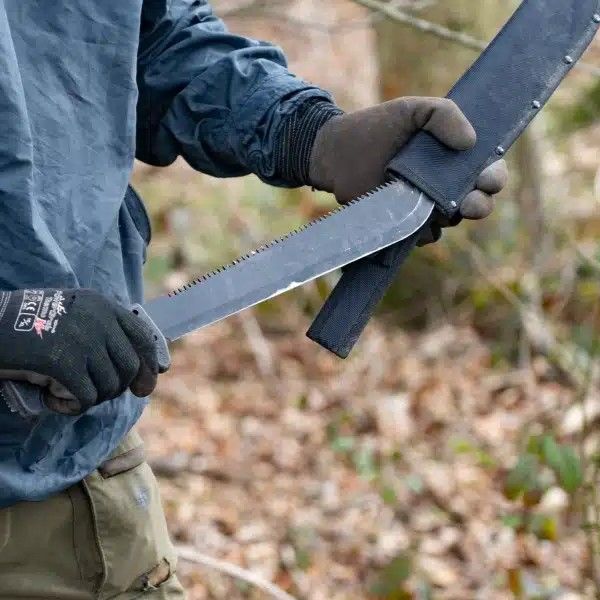
Machetes are versatile tools used in agriculture, landscaping, and outdoor work, but their sharp blades and heavy weight make them potentially dangerous if not handled properly. Understanding how to use, carry, and store a machete safely is essential to prevent injuries to yourself and those around you.
Hazards Associated with Machete Use
Machetes present several hazards, including:
- Deep cuts or amputations from blade contact
- Struck-by injuries from uncontrolled swings
- Slips and falls while swinging on uneven terrain
- Flying debris striking the eyes and face
- Fatigue-related loss of control
- And, injuries to nearby workers within the swing radius
Personal Protective Equipment
Using a machete comes with inherent risks, from sharp blades to flying debris. Wearing the proper Personal Protective Equipment (PPE) is essential to reduce the likelihood of cuts, punctures, and other injuries. PPE not only protects your body but also helps improve grip, control, and overall safety while working. Key items to consider include:
- Cut-resistant gloves
- Safety glasses or face shields
- Long pants and long sleeve shirts
- Boots with slip-resistant soles
- And, hard hats
Safe Work Practices
Working with a machete requires focus, control, and awareness of your surroundings. Following safe work practices is essential to prevent injuries, protect those nearby, and ensure the task is completed efficiently.
The following are just a few safe work practices you can use when working with machetes:
- Maintain a firm grip and keep both hands away from the blade
- Use controlled, deliberate swings
- Keep a safe distance from other workers
- Always cut away from the body and legs
- Avoid working on unstable or slippery ground
- Never use a machete above shoulder height
- And, do not attempt to catch a falling machete
Handling and Storing
Improper handling during transport is a common cause of machete-related injuries. To reduce risk, always carry the machete with the blade pointed downward and away from your body, and use a sheath when transporting or storing it. Never carry a machete on your shoulder, and be sure to store all machetes in designated areas when they are not in use.
Inspection and Maintenance
Before each use, inspect the machete for:
- Cracks, chips, or excessive wear on the blade
- Loose, cracked, or damaged handles
- Rust or corrosion that could weaken the blade
- And, a secure attachment between the blade and handle
Maintenance requirements include:
- Keeping the blade sharp to reduce excessive force
- Cleaning the blade after use
- Properly sheathing and storing tools after work
- And, removing damaged machetes from service
Emergency Response
Even when following safety precautions, injuries can still happen when using a machete. If an accident occurs, stop work immediately to prevent further harm. Administer first aid procedures to control any bleeding and stabilize the injury, and notify a supervisor right away. Seek medical attention as needed, even for minor cuts, and report all injuries according to workplace protocols. Timely response and proper reporting not only protect your health but also help maintain a safe working environment for everyone.
Conclusion
Machetes are powerful and versatile tools, but their sharp blades and heavy weight make proper safety practices essential. Awareness, preparation, and attention to detail are key. Treat every task with caution, respect the tool, and ensure that both you and those around you stay safe.

Brooklyn Nice
Brooklyn Nice is a Content Development Specialist at JJ Safety, where she creates engaging, OSHA-focused safety content, training materials, and educational resources for workers and employers. She has earned her OSHA 10 Certification, providing her with a strong foundation in workplace safety principles and industry best practices.