
When it comes to securing new business, safety performance isn’t just important, it’s measurable.
General contractors, project owners, and prequalification platforms rely heavily on safety metrics like the EMR, TRIR, and DART to evaluate risk. These numbers tell a story about your company’s safety culture, incident history, and overall reliability.
If you do understand them, you can use them to strengthen your position and secure more opportunities. If you don’t understand them, you’re at a disadvantage. But you’re in luck, today’s blog breaks these down so you can better understand them and focus on strengthening your business.
What Are Safety Metrics?
Safety metrics are standardized metrics used to evaluate a company’s past safety performance. They are commonly required in contractor prequalification and are often reviewed before awarding work.
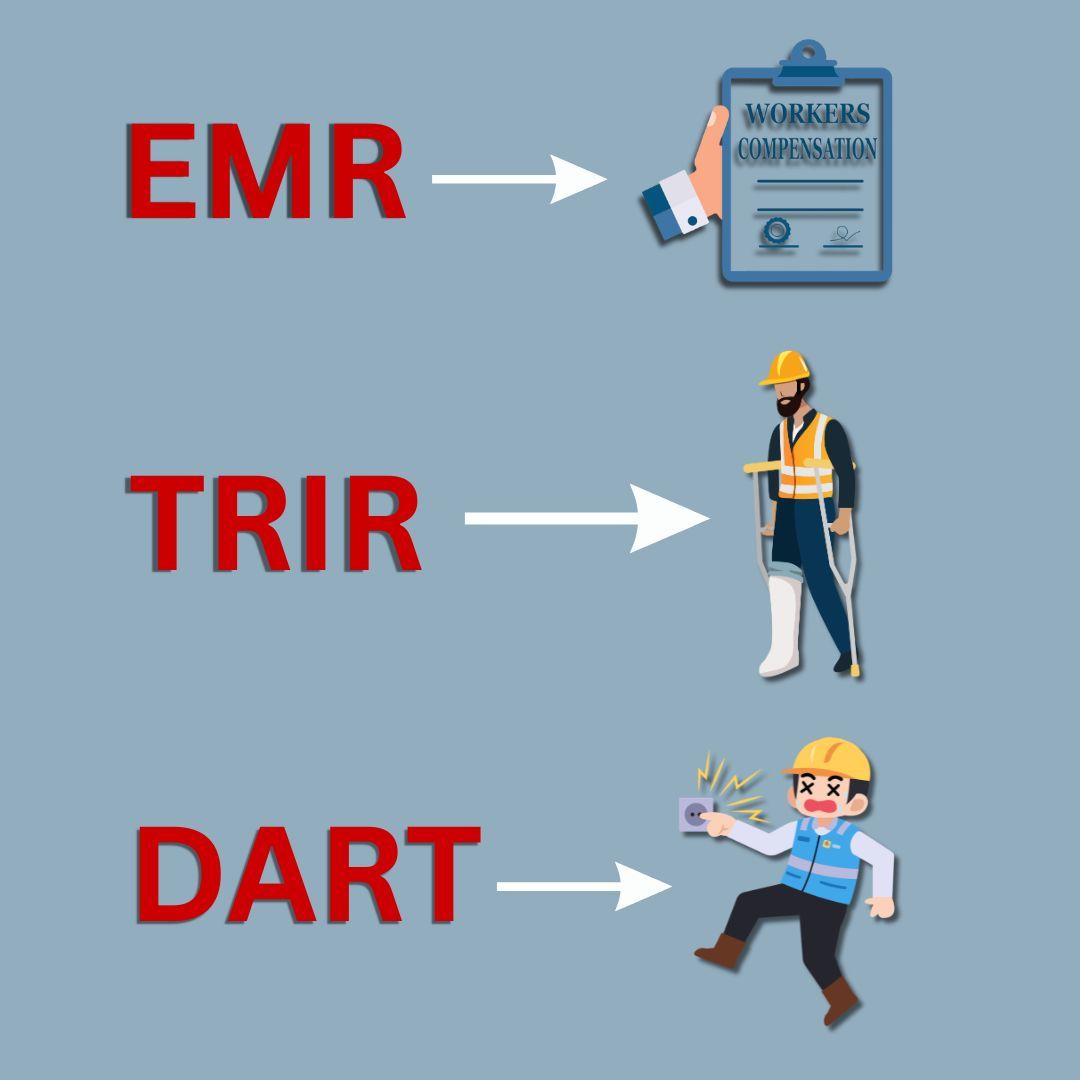
The 3 most widely used safety metrics in the United States are:
- The Experience Modification Rate (EMR) (MOD/WCB in Canada)
- The Total Recordable Incident Rate (TRIR) (Total Recordable Injury Frequency (TRIF) in Canada)
- And, Days Away, Restricted, or Transferred Rate (DART)
Each one measures safety from a different angle.
Experience Modification Rate (EMR)
The EMR is a number used by insurance companies to assess your workers’ compensation risk.
The core EMR formula looks something like this:
The EMR is calculated by dividing a company’s actual workers’ compensation losses by its expected losses based on industry averages, typically over a 3-year period.
Once you’ve calculated your EMR, compare it to this guide and see where your EMR falls:
- 1.0: Average risk/industry standard
- Below 1.0: Better than average; lower insurance premiums
- And, Above 1.0: Worse than average; higher insurance premiums
Your EMR is important because:
- It directly impacts your insurance premiums
- It’s heavily weighted in prequalification decisions
- And, it’s often used as a quick “go/no-go” metric by owners
Total Recordable Incident Rate (TRIR)
The TRIR measures the total number of OSHA-recordable incidents per 100 full-time workers over a year.
The core TRIR formula looks something like this:
The key components of calculating your company’s TRIR include:
- Number of Incidents: Total OSHA-recordable injuries and illnesses
- 200,000: The base content representing 100 employees working 40 hours per week for 50 weeks per year
- And, Total Hours Worked: Actual hours worked by all employees, excluding vacation, sick leave, or other paid time off
You can use your TRIR along with the North America Industry Classification System (NAICS) code to better understand what that rate actually means, since the NAICS code sets the industry benchmark used by OSHA and insurance providers to determine whether your safety performance is acceptable, competitive, or high risk.
Your TRIR matters because:
- It reflects your overall safety performance compared to other companies within the same industry as you
- It’s frequently required by prequalification platforms
- And, it’s used to compare your company against industry averages
Days Away, Restricted, or Transferred Rate (DART)
DART focuses specifically on more serious incidents that affect a worker’s ability to perform their job.
The core DART formula looks something like this:
The key components of calculating your company’s DART include:
- DART Incidents: Sum of injuries/illnesses resulting in days away from work, restricted work, or job transfers
- 200,000: The annual hours worked by 100 employees working 40 hours per week for 50 weeks per year
- And, Total Hours Worked: Actual hours worked by all employees, excluding vacation, sick leave, or other paid time off. This could include temporary workers or contractors if they’re under primary supervision
Your DART matters because:
- It highlights the severity of incidents, not just frequency
- It’s seen as a strong indicator of workplace risk
- And, it’s often scrutinized more closely than your TRIR
Prequalification Platforms That Use These Metrics
Most major contractor prequalification platforms, like ISNetworld®, Avetta®, and Veriforce®, require the EMR, TRIR, and DART as part of their evaluation process.
These platforms use your safety metrics, along with documentation and safety programs, to generate an overall grade or approval status.
How Safety Metrics Impact Your Grade
Your safety metrics can directly affect:
- Whether your company is approved or denied
- Your overall safety rating or letter grade
- Your ability to bid on or secure new projects
- And, how often your profile is flagged for review
For example:
- A high EMR or TRIR may trigger additional scrutiny
- A low DART rate can strengthen your profile
- Or, consistent improvement over time can boost your rating
In many cases, even one poor metric can offset otherwise strong documentation.
What Affects These Metrics?
There are several factors that can influence your EMR, TRIR, and DART, such as:
- Incident Frequency: More recordable incidents = a higher TRIR and DART
- Incident Severity: Serious injuries (lost time or restricted work) increase your DART significantly
- Total Hours Worked: Lower hours with the same number of incidents = higher rates
- Claims History: Workers’ compensation claims directly impact your EMR
- And, Reporting Accuracy: Improper OSHA recordkeeping can inflate or misrepresent your scores
What Can Increase Your Rate (In a Bad Way!)
Here are a few reasons your rate can increase:
- Frequent minor injuries which can add up quickly
- Poor hazard recognition
- Inadequate training
- Lack of supervision
- Rushing work or cutting corners
- Failing to correct known hazards
- And, a weak safety culture or accountability
Rates that increase is generally not a good thing. As we’ve discussed above, higher/increased rates can indicate below average, high risk, or higher insurance premiums.
What Can Help Lower and Improve Your Rates
To help improve or lower your rate:
- Implement strong safety training and onboarding programs
- Perform regular Job Hazard Analyses (JHA)
- Consistently use Personal Protective Equipment (PPE)
- Implement active supervision and leadership improvement
- Encourage near-miss reporting
- Implement early intervention and injury management
- And, implement return-to-work programs to reduce DART impact
Why These Metrics Matter More Than Ever
Organizations like OSHA emphasize tracking and improving workplace safety performance, and these metrics have become the industry standard.
Safety metrics are more than just numbers, they are:
- A reflection of your company culture
- A signal of your risk level to clients
- And, a key factor in your ability to grow your business
Conclusion
The EMR, TRIR, and DART are not just compliance requirements, they’re critical metrics you can use as beneficial tools. When you understand them, you can:
- Identify weaknesses
- Improve safety performance
- Strengthen your prequalification profile
- And, SECURE NEW BUSINESS
At the end of the day, better safety rates don’t just look good on paper, they represent safer jobsites, healthier workers, and a stronger company overall.
If you’re having trouble with your EMR, TRIR, or DART, give JJ Safety a call at 866-627-3850 or visit our website. We’re here to help!

Brooklyn Nice
Brooklyn Nice is a Content Development Specialist at JJ Safety, where she creates engaging, OSHA-focused safety content, training materials, and educational resources for workers and employers. She has earned her OSHA 10 Certification, providing her with a strong foundation in workplace safety principles and industry best practices.