
Falls remain one of the leading causes of serious workplace injuries and fatalities, especially in construction and industrial settings. When employees are working at heights, fall protection is not optional, it’s essential.
Two of the most common fall protection systems are safety nets and personal fall arrest systems. While both are designed to prevent serious injuries, they function very differently.
Understanding the Hierarchy of Fall Protection
Before choosing a system, it’s important to understand that fall protection follows a hierarchy. Whenever possible, hazards should be eliminated or controlled through guardrails and engineered solutions first. When those are not feasible, safety nets or personal fall arrest systems become necessary protective measures.
Both systems are recognized under the Occupational Safety and Health Administration (OSHA) regulations for fall protection in construction, under 29 CFR 1926 Subpart M, but they must meet specific requirements to be compliant.
What Are Safety Nets?
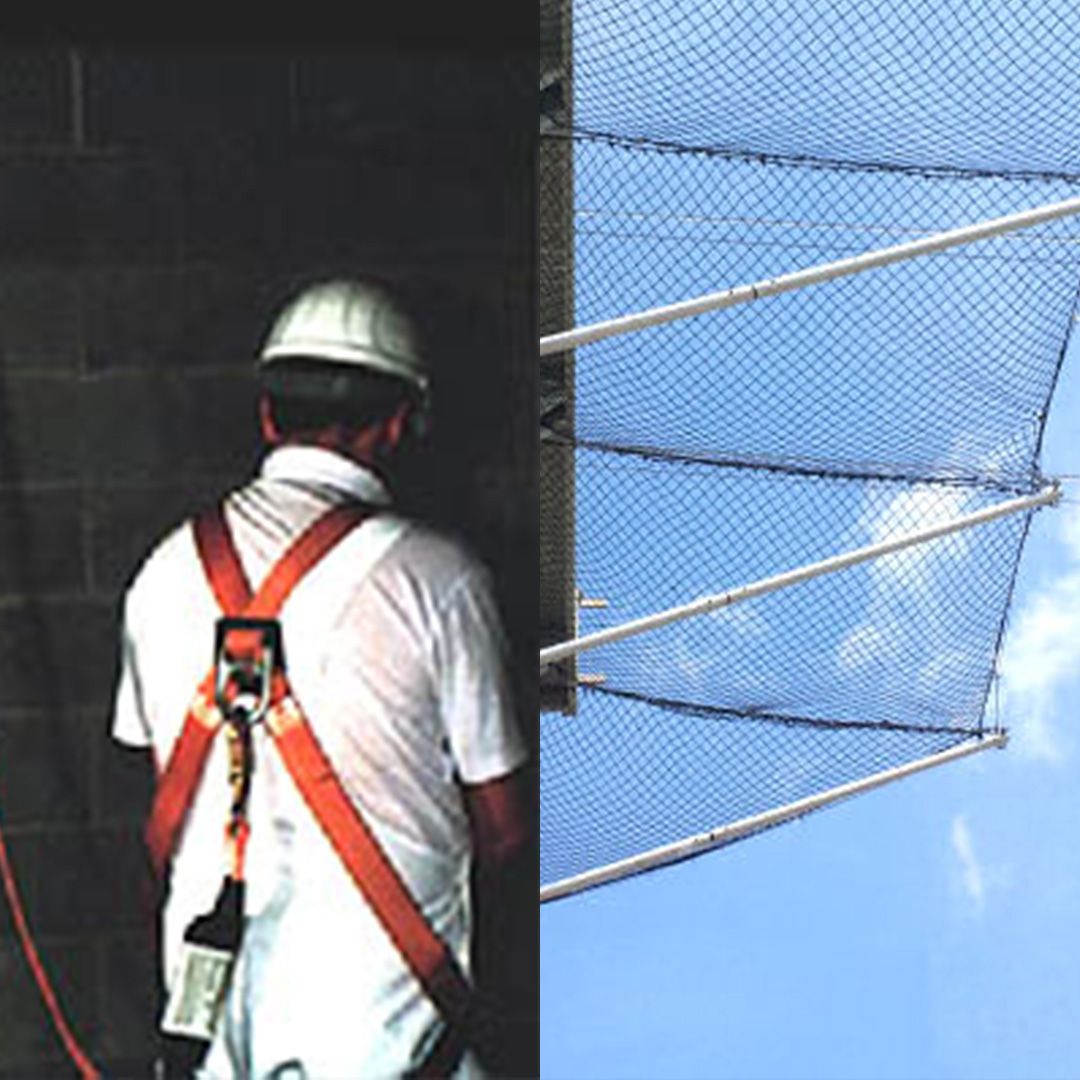
Safety nets are passive fall protection systems installed below a work surface. Their purpose is simple: if a worker falls, the net catches them before they hit a lower level.
Safety nets are typically used when:
- Work is being performed at significant heights
- Guardrails or personal fall arrest systems are impractical
- Or, workers are exposed to leading-edge or open-sided hazards
Because safety nets do not rely on worker action, they provide protection even if a worker slips unexpectedly. However, they must be properly installed, inspected, and tested to ensure they can withstand impact forces.
Key Requirements for Safety Nets
To be effective and compliant, safety nets must:
- Be installed as close as possible beneath the working surface
- Extend outward enough to catch a falling worker
- Be drop-tested or certified for performance
- And, be inspected weekly and after any impact
A damaged or improperly installed net can create a false sense of security, which is why inspections and maintenance procedures are crucial.
What Is a Personal Fall Arrest System (PFAS)?
Unlike safety nets, a personal fall arrest system is active protection. It requires the worker to wear equipment that stops a fall in progress.
A complete PFAS includes:
- A full-body harness
- A lanyard or Self-Retracting Lifeline (SRL)
- And, a secure anchor point capable of supporting required loads
When a fall occurs, the system arrests the worker’s descent and limits the forces placed on the body.
Important Considerations for PFAS
For a fall arrest system to work properly:
- Anchor points must support at least 5,000 pounds per worker, or be designed by a qualified person
- The free fall distance must be limited to 6 feet or less
- Equipment must be inspected before each use and after a fall occurs
- And, workers must be trained on proper fitting and use
Improper harness fit or incorrect anchoring can result in serious injuries, even if the system technically “stops” the fall.
Safety Nets vs. Fall Arrest Systems
Both systems are effective, but they serve different purposes.
Safety nets:
- Protect multiple workers at once
- Require less individual compliance
- And, are ideal for large-scale construction projects
Personal fall arrest systems:
- Offer mobility and flexibility
- Are suitable for tasks requiring movement between areas
- And, require individual training and responsibility
In some cases, employers may use a combination of both systems to maximize protection.
Training and Rescue Planning
Installing fall protection is only part of the equation. Employers must also prepare for what happens after a fall.
A fall arrested by a harness can lead to suspension trauma if a worker is not rescued promptly. A comprehensive fall protection plan should include:
- Clear rescue procedures
- Designated rescue personnel
- Available recuse equipment
- And, emergency communication protocols
Conclusion
Safety nets and personal fall arrest systems are life-saving tools when used correctly. The key is not just having the equipment on site, but ensuring it is properly selected, installed, inspected, and understood by workers.
Fall protection is more than compliance, it is a commitment to ensuring every worker goes home safely at the end of the day.

Brooklyn Nice
Brooklyn Nice is a Content Development Specialist at JJ Safety, where she creates engaging, OSHA-focused safety content, training materials, and educational resources for workers and employers. She has earned her OSHA 10 Certification, providing her with a strong foundation in workplace safety principles and industry best practices.