
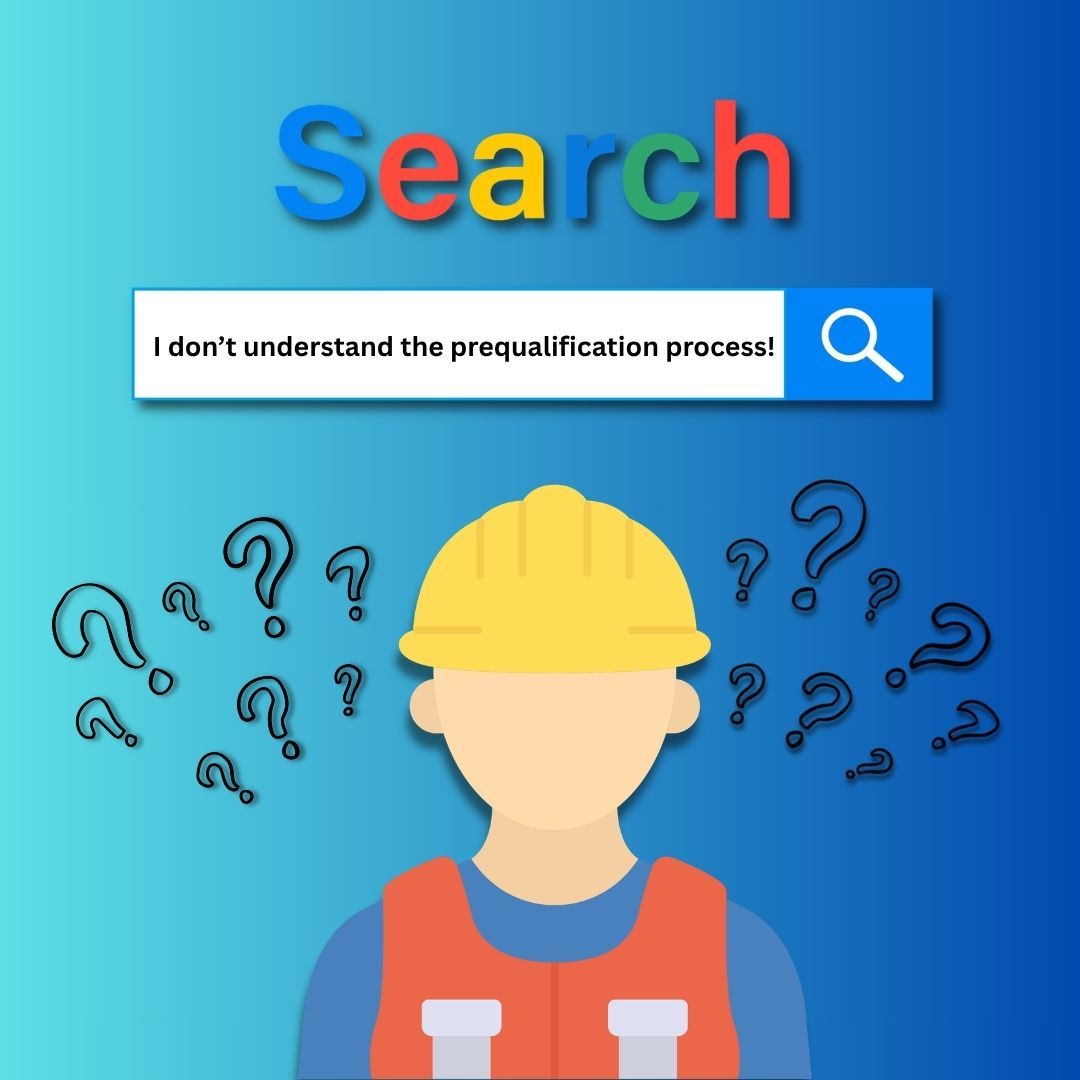
Prequalification platforms like Avetta®, ISNetworld®, and Veriforce® are essential tools for connecting contractors with hiring clients. But for many contractors, especially those new to the process, these systems can feel overwhelming.
From OSHA logs to insurance requirements, there are a handful of questions that come up again and again. Below, we break down the most common ones and provide a clear answer to help you stay compliant and competitive.
What Are Common Questions?
In this section, we’ll cover three common questions and later provide a clear, practical answer that can be applied to each one.
Question 1: “How do I meet the 3-year OSHA log requirements if I just opened my business?”
This is a question many new contractors run into when completing the prequalification process through platforms like ISNetworld® or Avetta®.
Most prequalification systems require three years of OSHA 300/300A logs to evaluate your company’s safety performance over time. But if your business is newly established, you simply may not have that history yet, and that’s okay.
Question 2: “How do I get my insurance compliant if I don’t meet the platform requirements?”
This is another common challenge contractors face when working through prequalification platforms.
Most platforms, and the clients behind them, require specific insurance coverage limits, endorsements, and policy details. If your current policy doesn’t meet those requirements, your profile can be flagged as non-compliant, which may prevent approval or delay your ability to work.
Question 3: “Why am I being asked to meet requirements that don’t apply to my company?”
This is a common point of frustration for contractors.
At first glance, it can feel like you’re being asked to provide information or meet requirements that have nothing to do with the work you perform. But in most cases, there’s a reason behind it.
Prequalification systems are designed to standardize the review process across a wide range of contractors, industries, and risk levels. Because of this, platforms often apply broad or default requirements that may not perfectly align with every company’s specific scope of work.
These are common questions that can create unnecessary confusion and stress for contractors, but fortunately, there’s a straightforward solution that applies to each of them.
That solution is variances!
What are Variances?
A variance is essentially a formal exception request submitted to a hiring client, asking them to review and approve your information, even if it doesn’t fully meet standard platform requirements.
In simple terms, a variance gives you the opportunity to explain your situation instead of being automatically disqualified.
While the exact process may vary slightly depending on the platform, the general steps are consistent:
- Submit your documentation through the platform
- The system flags an item as non-compliant or incomplete
- You submit a variance request to the hiring client
- The hiring client reviews the request
- And, a decision is made to approve or deny the exception
Variances are not guaranteed. Approval depends heavily on the hiring clients risk tolerance, project requirements, type of work being performed, and their confidence in your company’s safety and compliance practices. Some clients may be flexible, while others may require strict adherence to requirements before approval.
Variances are especially useful when dealing with situations where your company doesn’t perfectly fit standard requirements.
Here’s how they apply to the three common questions mentioned above:
1. Missing 3-Year OSHA Logs
If your company is newly established, you may not have the required three years of OSHA logs. A variance can help you here because:
- It can allow you to explain your company’s start date
- It gives context for why full historical data is not available
- It shifts the focus to your current safety programs and leadership experiences
- And, it can prevent automatic rejection due to the lack of history
Instead of being penalized for being new, you’re evaluated based on what you do have.
2. Insurance Doesn’t Meet Platform Requirements
If your insurance coverage falls below required limits or is missing endorsements, your profile may be flagged as non-compliant.
A variance can help with this issue because:
- It allows hiring clients to review your existing coverage and determine if it’s acceptable for the scope of work
- It provides an opportunity to justify lower limits based on reduced risk exposure
- It can help you move forward while working toward full compliance
- And, it can prevent unnecessary delays while policy updates are in progress
Real-Life Story
A paper supplier was being asked for a $10m Commercial General Liability (CGL) insurance policy but the Master Service Agreement (MSA) said $2m. Instead of getting a quote to increase their insurance, the contractor requested a variance.
3. Requirements That Don’t Apply to Your Company
Sometimes platforms request documentation or programs that don’t align with your actual scope of work.
In this situation, a variance can help because:
- It allows you to formally state that a requirement is not applicable
- It provides clarity on your actual services and risk exposure
- And, it can prevent your profile from being flagged as incomplete
Submitting a Strong Variance Request!
To improve your chances of approval when submitting a variance:
- Be clear and concise in your explanation
- Provide supporting documentation when possible
- Demonstrate low risk and strong safety practices
- Avoid vague or incomplete responses
- And, respond quickly to any follow-up questions
Conclusion
Variances are one of the most valuable, but often misunderstood, tools in the prequalification process. They don’t replace compliance, but they do provide flexibility when your company doesn’t perfectly fit standard requirements.
One important consideration when submitting variances is understanding your audience. Hiring clients are primarily concerned with the risk associated with bringing your company on, not the impact on your budget. Submitting a variance based on cost constraints can reflect poorly on your business. Variances should only be submitted when a requirement does not apply to your company’s scope of work or when it differs from the terms outlined in your contract.
If you’re having trouble navigating your prequalification platform or need answers to your questions, visit JJ Safety’s website or give us a call at 866-627-3850, we’re here to help.

Brooklyn Nice
Brooklyn Nice is a Content Development Specialist at JJ Safety, where she creates engaging, OSHA-focused safety content, training materials, and educational resources for workers and employers. She has earned her OSHA 10 Certification, providing her with a strong foundation in workplace safety principles and industry best practices.