
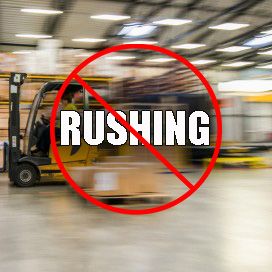
Deadlines, production pressure, and the urge to “just get it done” are part of everyday work, but rushing often comes with hidden risks. Whether it’s skipping a safety check, taking a shortcut, or moving faster than conditions allow, haste can quietly increase the likelihood of mistakes and injuries.
So, does rushing really affect safety? The short answer is yes!
What Are the Hazards?
Rushing in the workplace introduces several serious hazards that can lead to injuries, property damage, and near misses. Common hazards include:
- Reduced situational awareness: Employees may overlook hazards, warning signs, or changes in their environment
- Skipped safety procedures: Rushing often leads to shortcuts, such as bypassing lockout/tagout, inspections, or Personal Protective Equipment (PPE) use
- Poor decision making: Time pressure increases stress and fatigue, which can impair judgement
- Slips, trips, and falls: Moving too quickly can increase the likelihood of losing balance or missing uneven surfaces
- Equipment misuse: Tools and machinery may be used improperly or without proper setup
- Increased ergonomic injuries: Fast, repetitive, or awkward movements raise the risk of strains and sprains
- Communication failures: Instructions may be rushed, misunderstood, or not confirmed with coworkers
- Higher error rates: Mistakes are more likely when tasks are performed too quickly
- And, near misses escalating to incidents: Hazards that could be avoided with proper attention can result in serious injuries
How Does Rushing Impact Safety?
Rushing mainly impacts safety by changing how people think, act, and make decisions on the job. When individuals feel pressured to move faster, their focus can shift from doing the task safely to doing it quickly. This mindset reduces attention to detail and increases the likelihood of mistakes.
Over time, a culture of rushing can normalize unsafe behaviors, making speed feel more important than safety. This not only increases the chance of incidents but also undermines safety programs and procedures designed to keep workers safe. By slowing down, you help maintain your focus, improve decision making, and reinforce a safety first mindset.
Do’s and Don’ts
Rushing can sometimes feel unavoidable in a fast-paced work environment, but how you respond to time pressure makes a critical difference.
Knowing what actions support safety and what behaviors increase risk, can help you make better decisions even when deadlines are tight.
The following do’s and don’ts outline practical ways to manage rushing on the job while keeping safety the top priority.
Do:
- Pause and assess the task before starting, even when under time pressure
- Follow all safety procedures regardless of deadlines or productivity goals
- Communicate clearly with coworkers, especially when work plans change
- Use required PPE every time; no exceptions for “quick” tasks
- Ask for help or more time if rushing would compromise safety
- Prioritize safety over speed; doing the job right is faster
- And, recognize when you’re feeling rushed and slow down
Don’t:
- Take shortcuts or skip steps to save time
- Assume conditions are safe without verifying them
- Ignore fatigue or stress; both increase when rushing
- Rush communication or leave room for misunderstandings
- Operate tools or equipment faster than they are designed for
- Let deadlines override safety rules
- And, normalize rushing as “just part of the job”
Conclusion
Rushing may seem like a way to save time, but it often does the opposite by increasing mistakes, rework, and the risk of injury. When speed becomes the priority, focus, communication, and decision-making suffer, putting both individuals and coworkers at risk. A strong safety culture recognizes that taking a moment to slow down is not a delay, but a preventive action.
By choosing to work deliberately, follow procedures, and speak up when time pressure becomes unsafe, we can protect people, improve performance, and ensure everyone goes home safely at the end of the day.

Brooklyn Nice
Brooklyn Nice is a Content Development Specialist at JJ Safety, where she creates engaging, OSHA-focused safety content, training materials, and educational resources for workers and employers. She has earned her OSHA 10 Certification, providing her with a strong foundation in workplace safety principles and industry best practices.